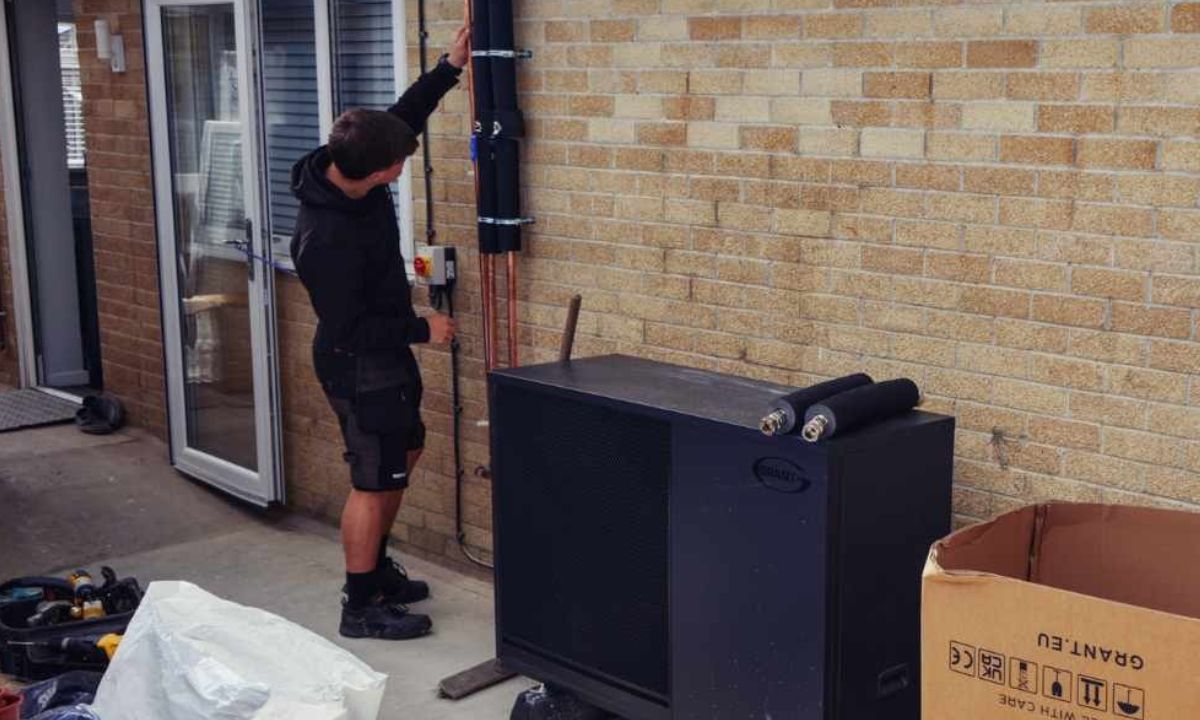
Why do two quotes for similar houses sometimes sit thousands of pounds apart? Rarely because of the heat pump itself. The gap usually comes from what each quote includes, and any fair air source heat pump cost UK comparison has to start there.
The same logic applies after the install. The unit is one bill, but the electricity it draws, the grant that softens the upfront cost and a yearly air source heat pump service all shape what you actually spend. Looking at them together gives a far fairer picture than any headline figure.
What an air source heat pump service really covers
A heat pump is built to run quietly for years, but it isn’t maintenance-free. It sits outside in all weathers, moves refrigerant under pressure and relies on software to decide when to run. A thorough air source heat pump service once a year catches trouble in any of it early.
Most engineers start outside. Leaves, grass clippings and snow can choke the airflow across the coil, and a blocked unit has to work harder for the same heat. They’ll also check the condensate drain, since meltwater that can’t escape may freeze around the base in January.
A typical visit then works through these checks:
- Water pressure and the expansion vessel are tested, because a slow pressure drop usually points to a small leak that’s cheaper to fix early.
- Filters and strainers are cleaned, which stops debris reaching the circulation pump and lets water flow freely through the radiators.
- Controller settings and fault history are reviewed, so odd defrost cycles or repeated error codes get spotted before they become a breakdown.
- The hot water cylinder and its controls are inspected, including the setting that guards against bacteria growing in stored water.
Manufacturers often tie their warranty to proof of regular servicing, so a skipped visit can cost far more than the visit itself. Keep the paperwork from every visit. It also reassures a buyer if you ever sell.
Some jobs you can do yourself. Keeping vegetation back from the unit, brushing leaves off the grille and glancing at the pressure gauge are all fine. Anything involving refrigerant needs a qualified engineer, because the gas is regulated and a leak is bad for both your wallet and the environment.
Air source heat pump UK suitability for British homes
A heat pump doesn’t burn anything. It pulls heat from the outdoor air, raises its temperature and passes it to the radiators, underfloor circuits and hot water cylinder.
Plenty of people assume Britain is too cold for one. It isn’t. Nearly every air source heat pump UK buyers will meet today is built for British winters and keeps producing heat well below freezing, as even cold air holds usable energy. The sun plays no part, so a grey January day changes little.
Efficiency is the real attraction. For each unit of electricity the machine uses, it delivers several units of heat, a ratio known as the coefficient of performance. A boiler can never deliver more than one unit of heat for each unit of fuel.
Suitability depends on the house more than the postcode. Insulation, the size of the existing radiators, hot water demand and the heat loss of each room decide how big the unit needs to be. Leaky houses aren’t ruled out, but they often need some fabric work first.
You’ll notice the heat feels different, too. Radiators run warm rather than scalding, and the home keeps an even temperature instead of swinging between hot and cool.
The air source heat pump price on a quote and what builds it
A quote is a bundle, not a single product. The air source heat pump price you see is the sum of the machine, the engineering around it and the labour to commission it all. Two bundles that look alike can contain very different amounts of work.
Start with the survey. A proper design begins with a room-by-room heat loss calculation, as it sizes the unit. Guessing from floor area alone risks an oversized machine that cycles on and off, or an undersized one that struggles in a cold snap.
These are the items that usually move the total most:
- Unit size and model, since a higher output or a premium make with a longer guarantee adds directly to the hardware cost.
- Hot water cylinder, which many homes need to replace or add, since a combi boiler heats water on demand and leaves no tank behind.
- Radiators and pipework, where undersized emitters may need upgrading so every room heats evenly at lower flow temperatures.
- Electrical work and groundwork, such as a suitable supply, a firm base for the outdoor unit and a tidy route for the pipes.
Certification matters here as well. Work that follows MCS standards is a condition of the government grant, so a bargain from an uncertified firm can cost you the funding. Ask what’s covered before comparing totals.
How air source heat pump prices change after installation
The upfront figure is only the start. Once you subtract the grant and add a few years of bills, air source heat pump prices look quite different, and that’s the better way to compare them with a boiler replacement.
In England and Wales, the Boiler Upgrade Scheme offers a fixed grant towards swapping a fossil-fuel boiler for a heat pump. The installer applies on your behalf and the money comes off the bill. The amount and eligibility rules do change, so check gov.uk before you sign anything. Scotland and Northern Ireland run separate support.
Running costs depend on your tariff and how well the house keeps its heat. Because a heat pump multiplies the electricity it uses, bills can compete with gas, though that isn’t guaranteed when gas and electricity prices move independently.
Don’t forget the cost of doing nothing. An ageing boiler brings repair bills and, eventually, a forced replacement at a moment you didn’t choose. Planning the swap yourself leaves time to apply for support and organise any insulation work first.
Over a ten-year view, a few factors usually matter most. Insulation upgrades cut the heat the house loses, which lets a smaller unit do the same job and run for fewer hours. Annual servicing protects efficiency and the warranty, and a minor fault caught early costs far less than an emergency call-out. A time-of-use tariff shifts heavy running to cheaper periods, so the same amount of heat costs less to produce. Lower flow temperatures keep efficiency high, which is why generous radiators and good controls pay back quietly. None of these shows up on a day-one invoice, yet together they decide whether the system feels cheap or costly by year ten.
Before committing to any proposal, gather the heat loss figure, the full specification and the expected servicing schedule. Then lay the totals side by side. The lowest invoice on day one rarely turns out to be the cheapest system after a decade.
